连“升”为“接”
SONGYANG,ZHEJIANG
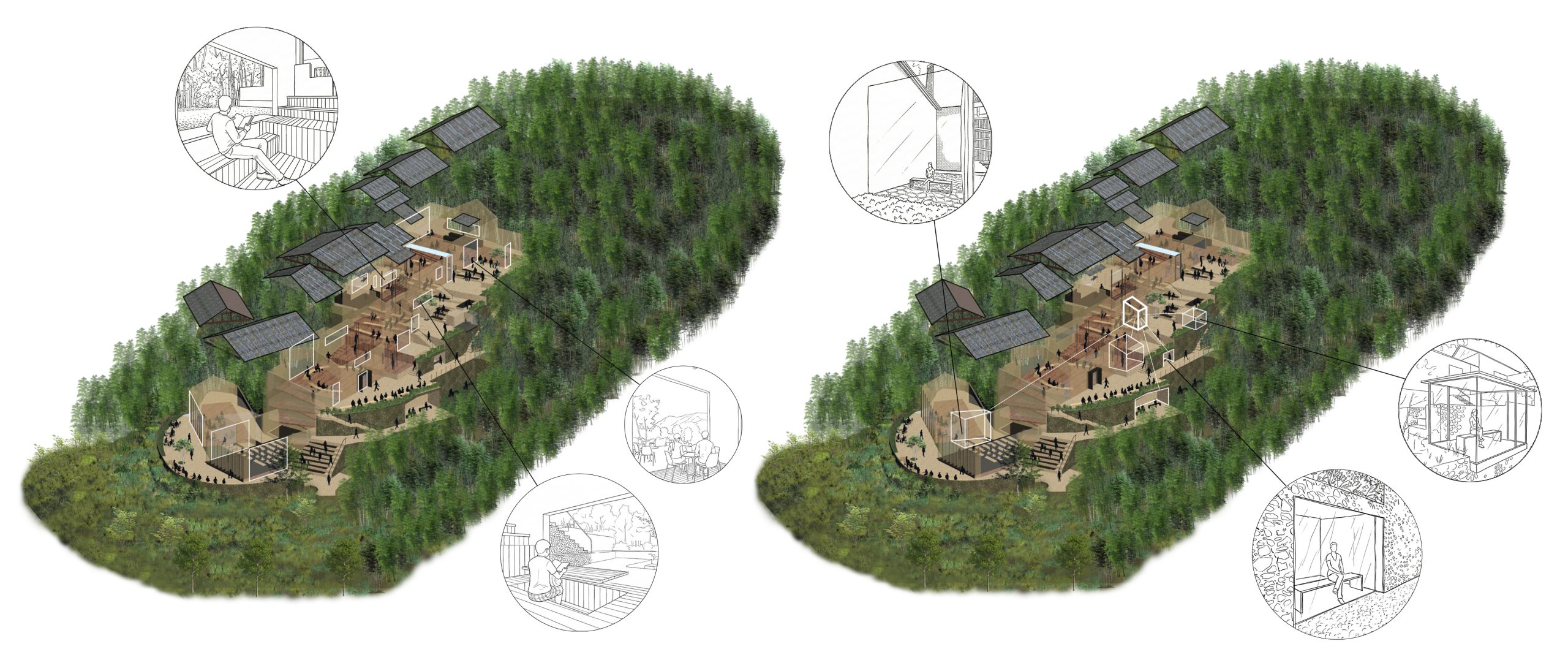
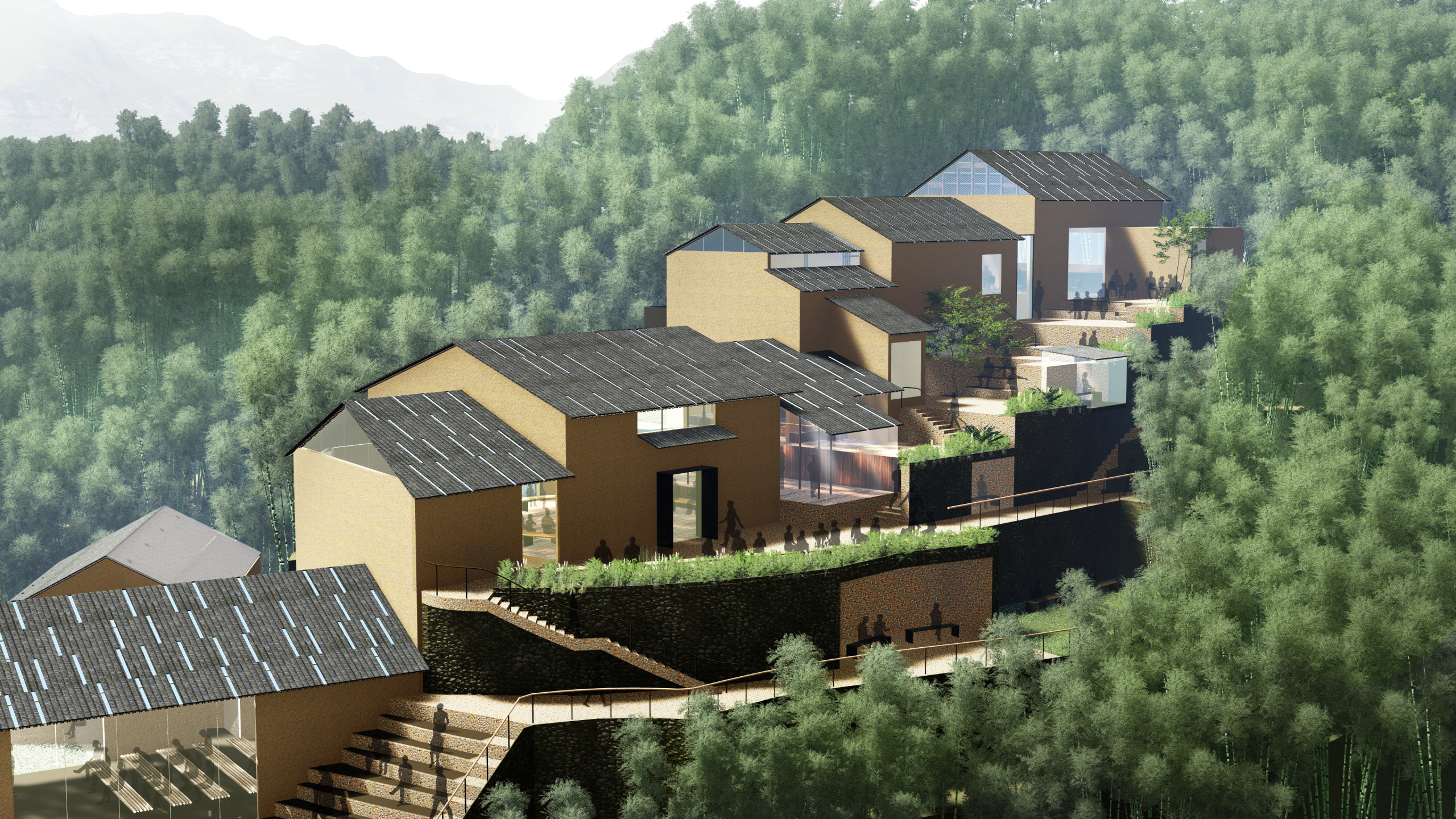
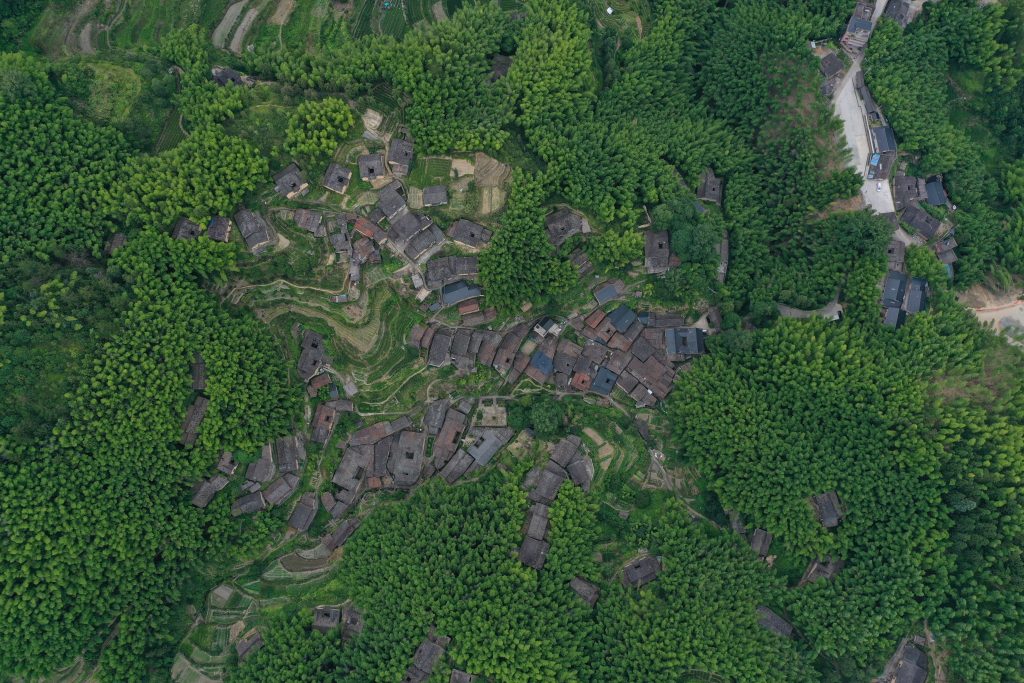
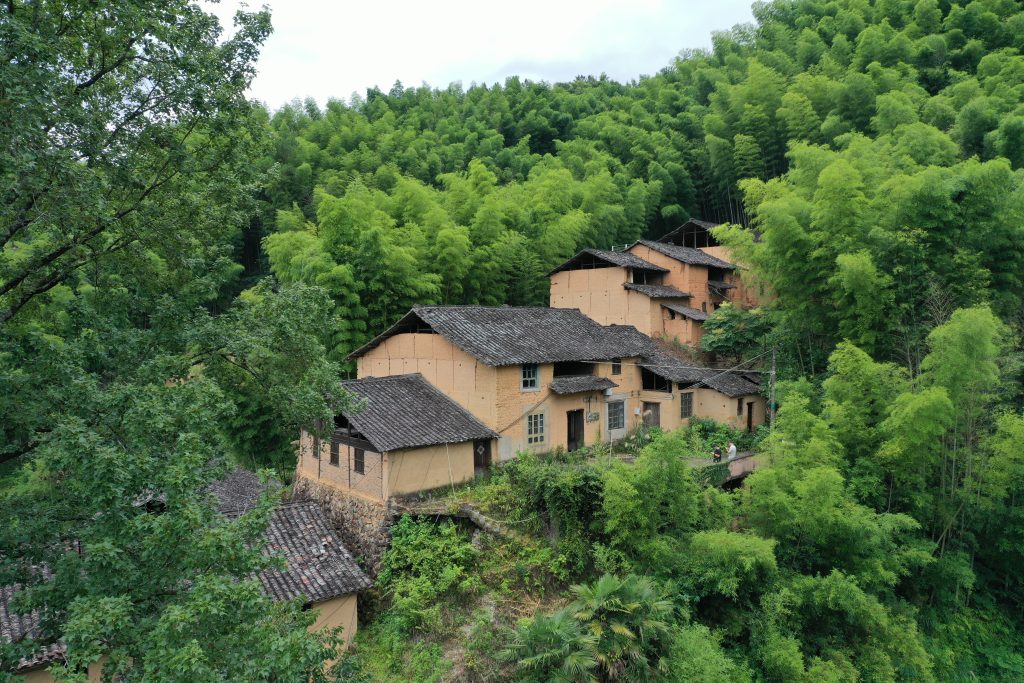
“Five Successive Levels” is situated in Henggang Village, Zhuyuan Township, Songyang County, on a series of terraces that ascend the mountain. Five old houses stand like slices of time, silent amidst bamboo groves and mist. What we faced was not merely five elevation differences, but five isolated scenes separated by terrain and the passage of time. The design began with a physical traverse—during our site survey, we moved level by level between the old houses, our bodies and perspectives constantly reshaped by the ascents and turns. It was this experience of climbing and searching that became the starting point for our reinterpretation of the space: transforming the geographical condition of “Five Successive Levels” into a spatial ritual that moves from “successive ascent” to “connection.”
We will unfold this translation across five dimensions: connecting the five levels, connecting interior and exterior, connecting with the environment, connecting interfaces, and connecting emotions. This is an invitation—the overall design will guide you to explore, pause, and look back, allowing you to reacquaint yourself with this land through different heights, perspectives, and bodily experiences. As the “spiritual high ground” of Henggang Village, it is not a static endpoint but a dynamic starting point: what you bring to it are your footsteps and gaze; what it brings to you will be scenery, memories, and a newly woven space-time. We believe that true “elevation” does not lie in how high you ascend, but in how we transform each step upward into a profound connection—with the land, with history, with others, and with the self.
01 Connecting the Five Levels
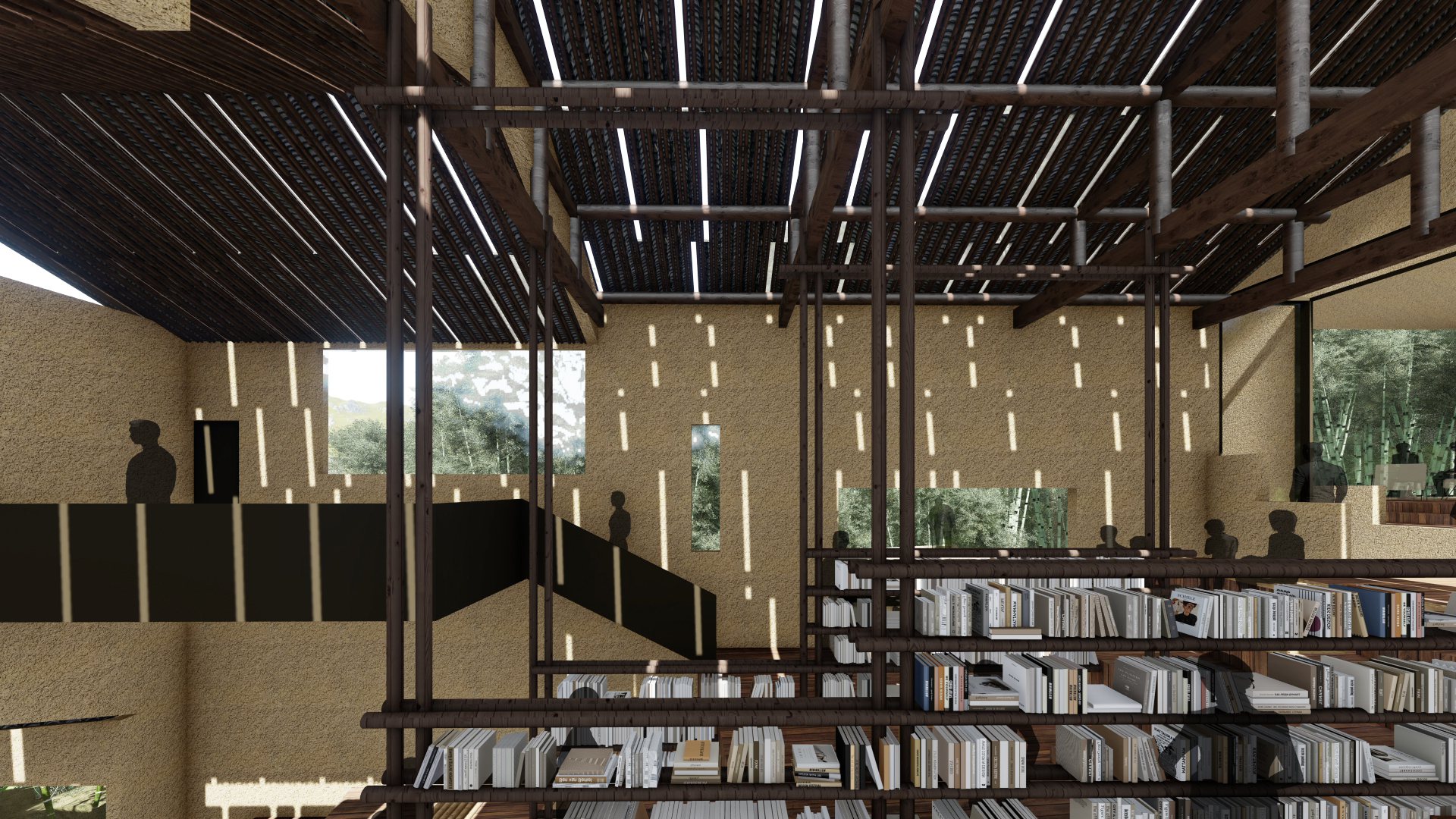
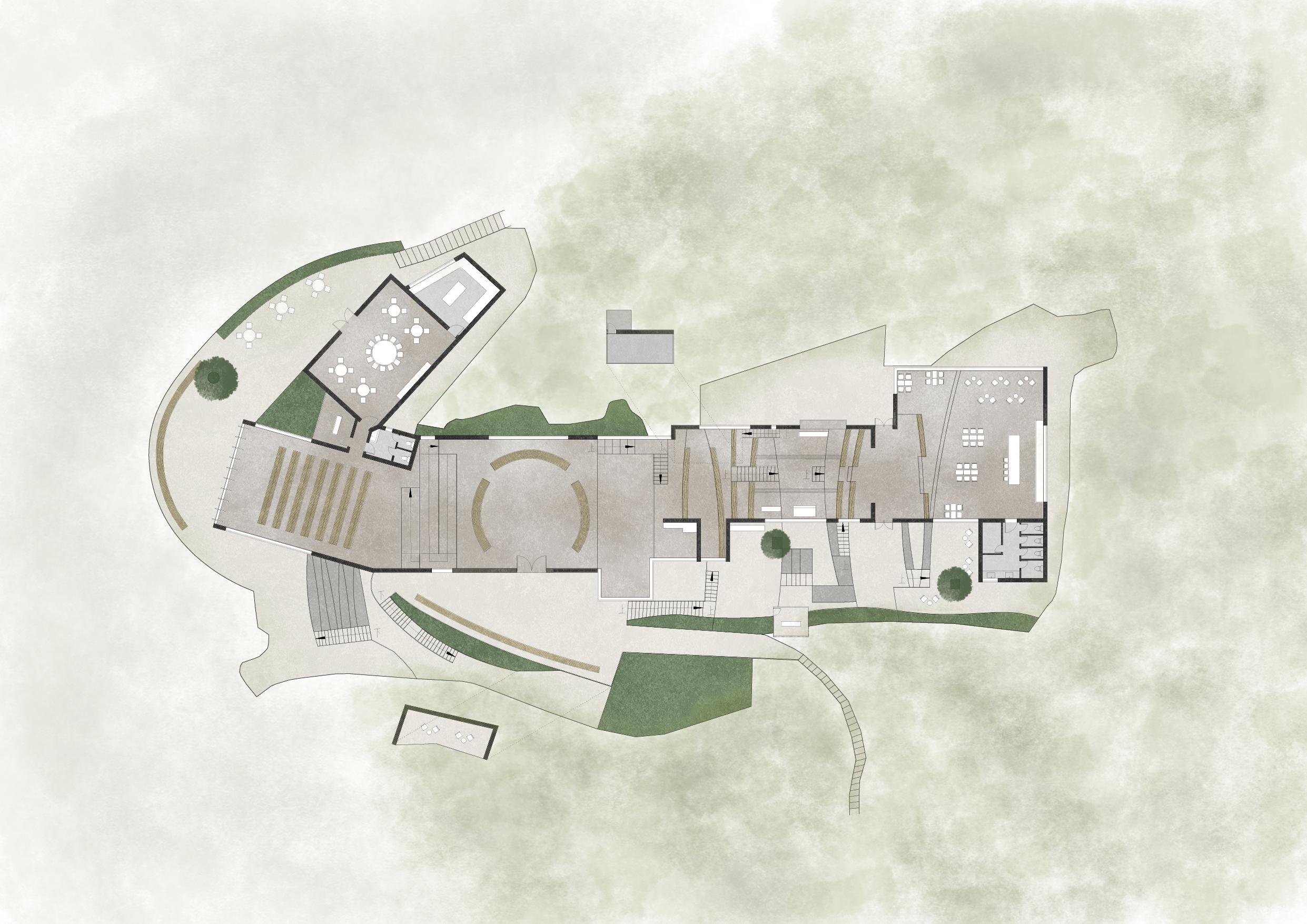
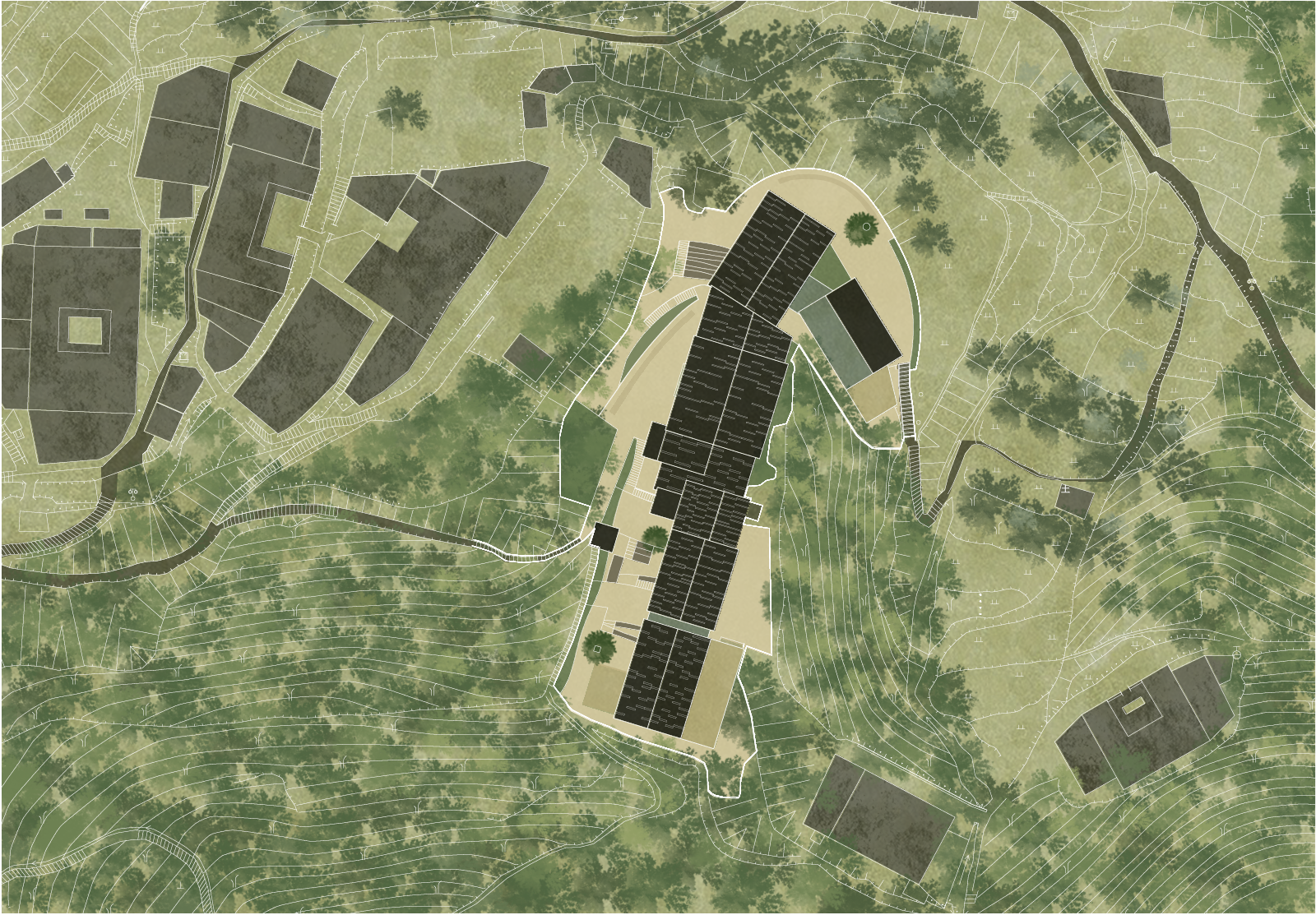
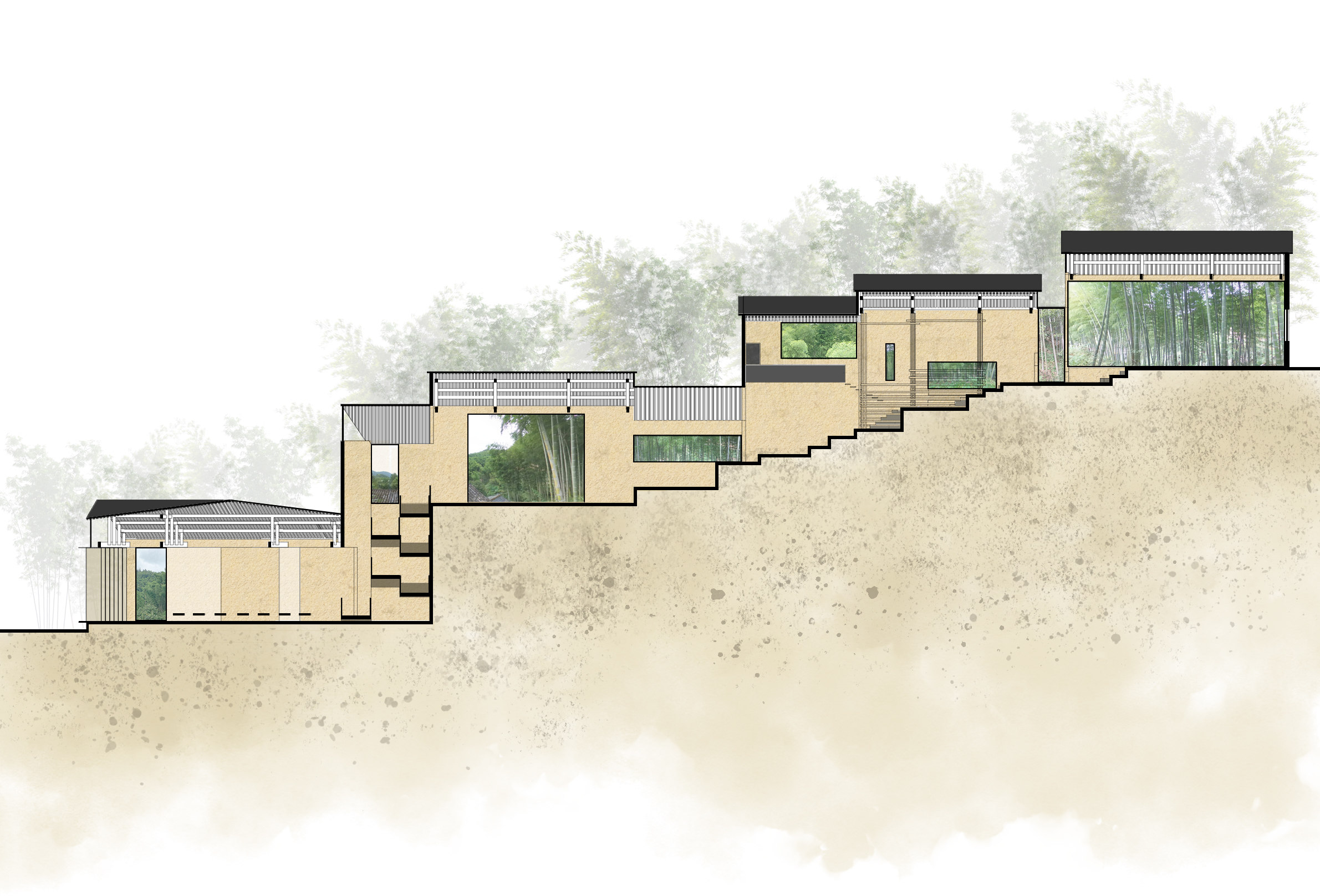
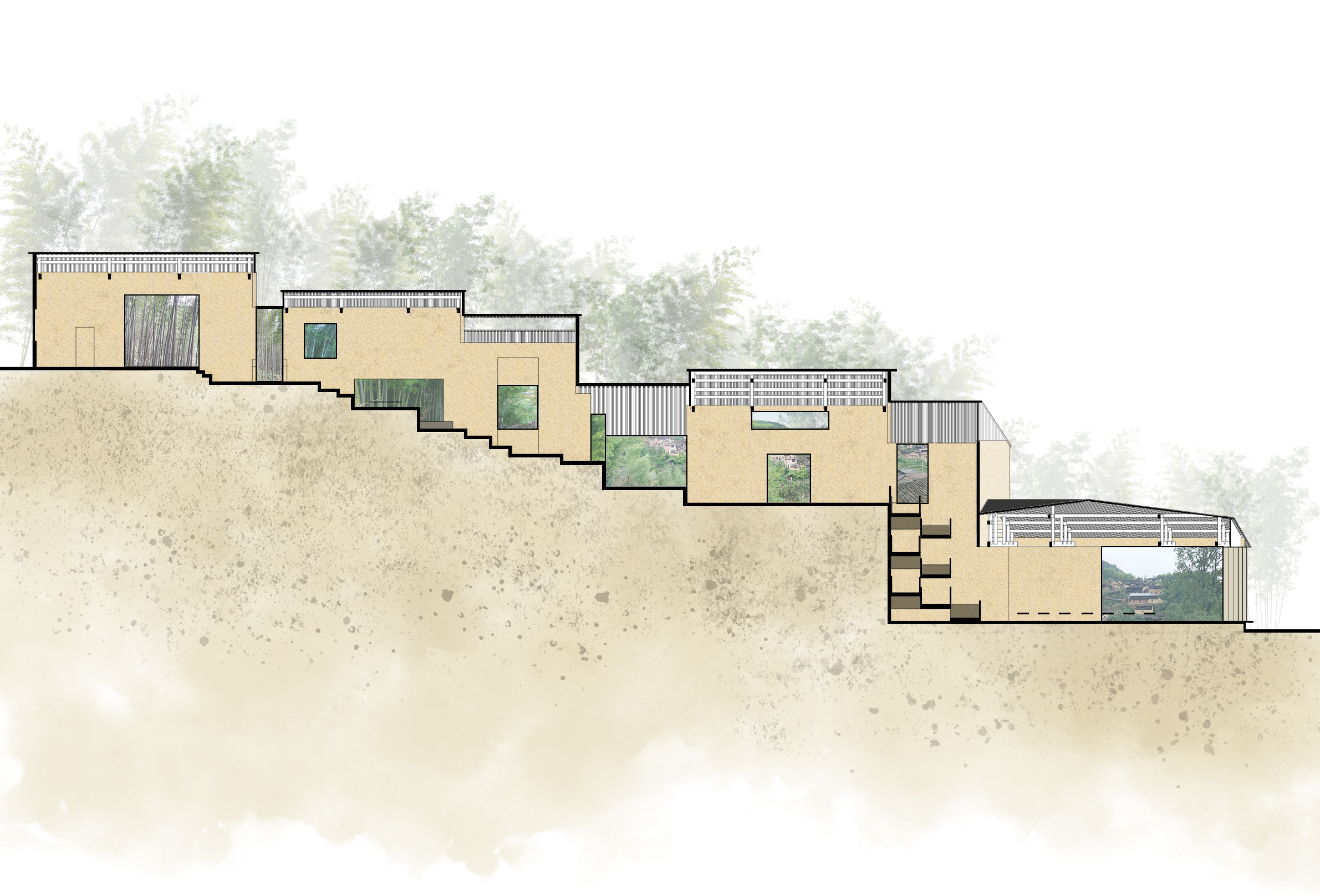
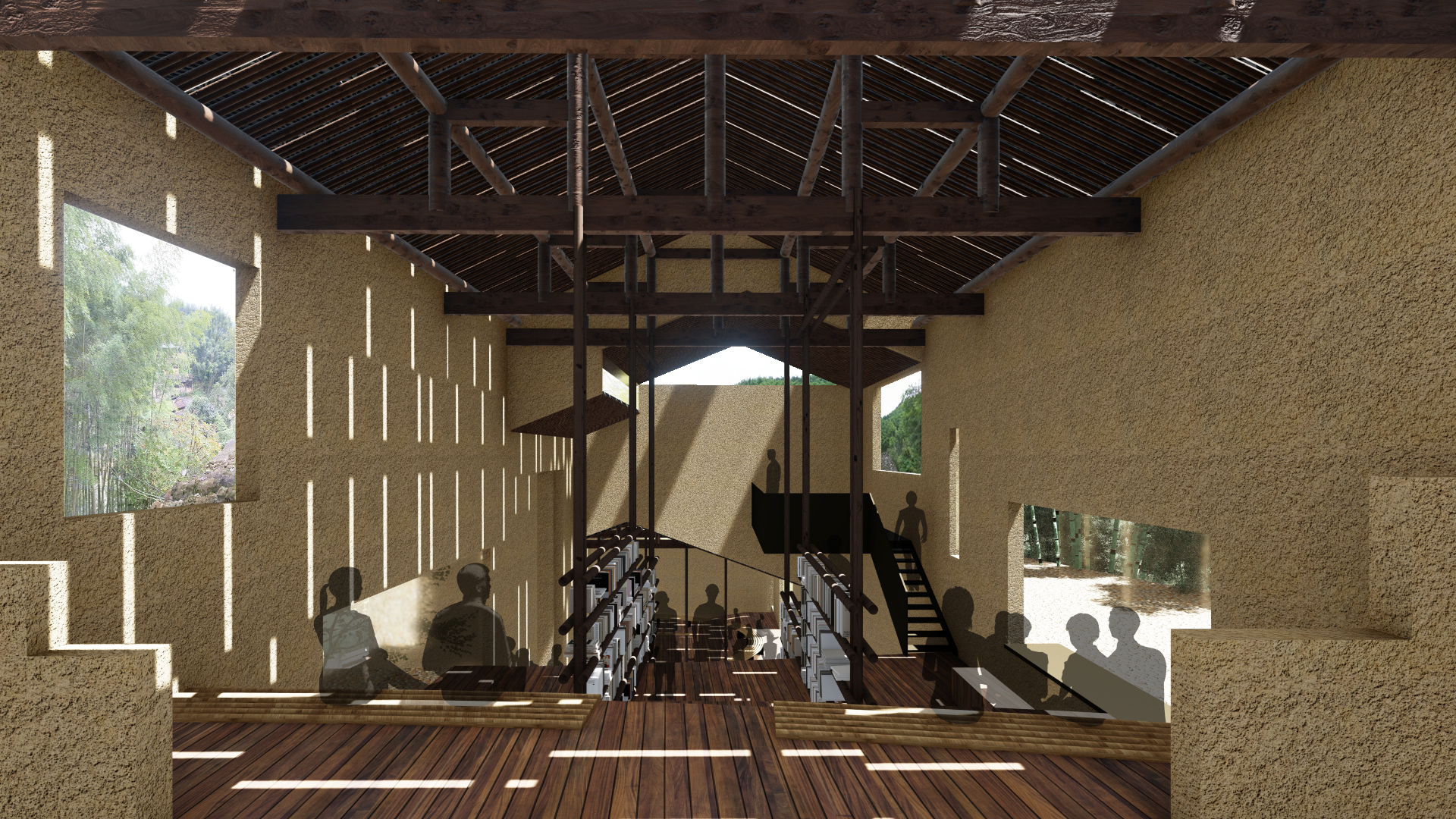
The five houses are arranged in terraces that follow the natural topography, with steps and ramps linking the five elevation levels together. The architectural complex forms a modern, multi-purpose open space capable of accommodating various types of activities. The internal large spaces are divided by function into a coffee area, a book lounge, an exhibition area, a lecture hall, and a dining area.
02 Connecting Interior and Exterior
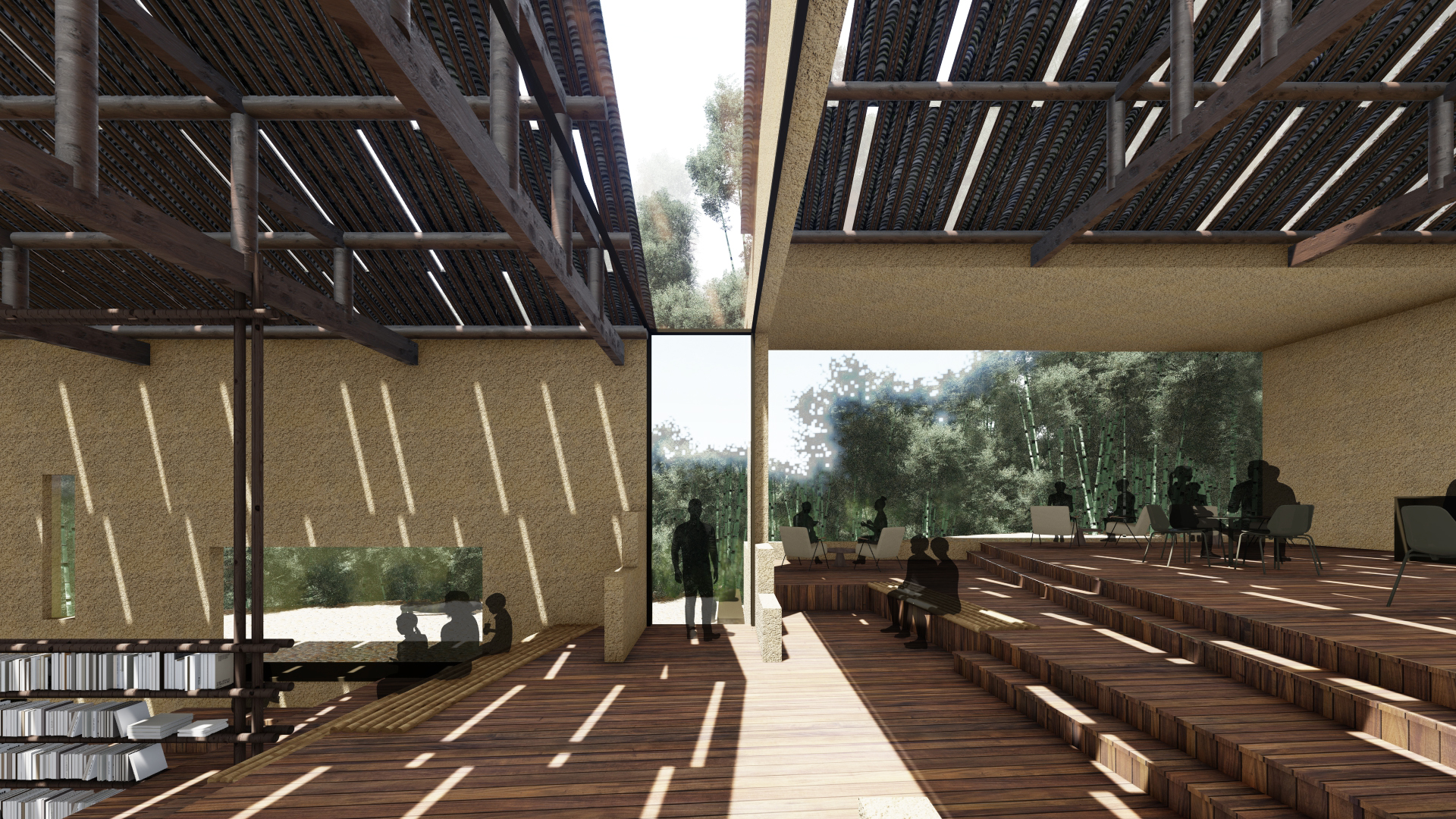
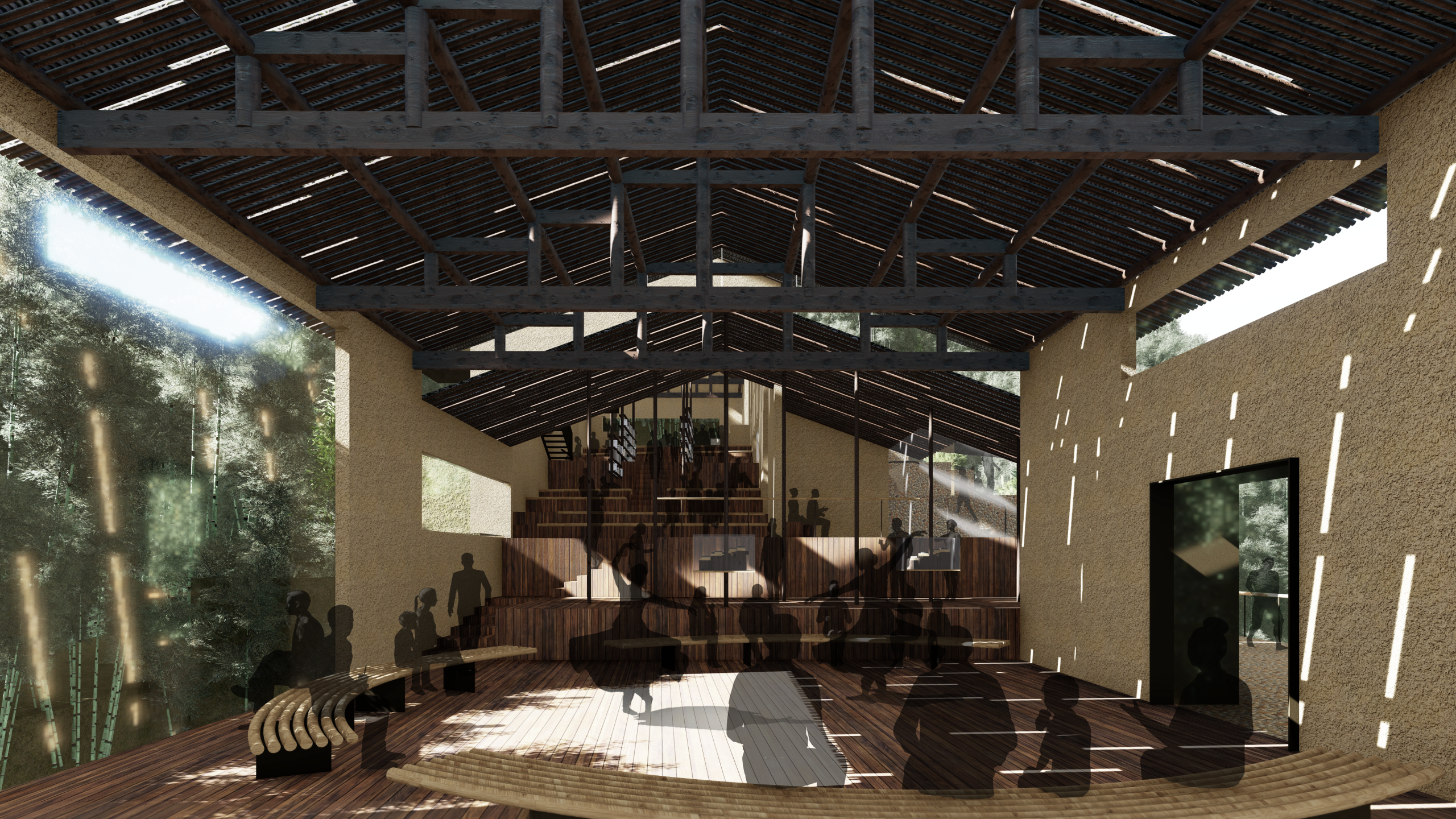
The stepped treatment of the interior terrain naturally extends to the exterior, transforming the original earth slope into an integral part of the architecture. This not only creates another circulation route for visitors but also provides a pleasant outdoor rest area. Meanwhile, the spacious platform at the main entrance is designed as a small performance area, with surrounding spaces allowing audiences to gather and watch, offering a flexible stage for both traditional and contemporary performances.
03 Connecting with the Environment
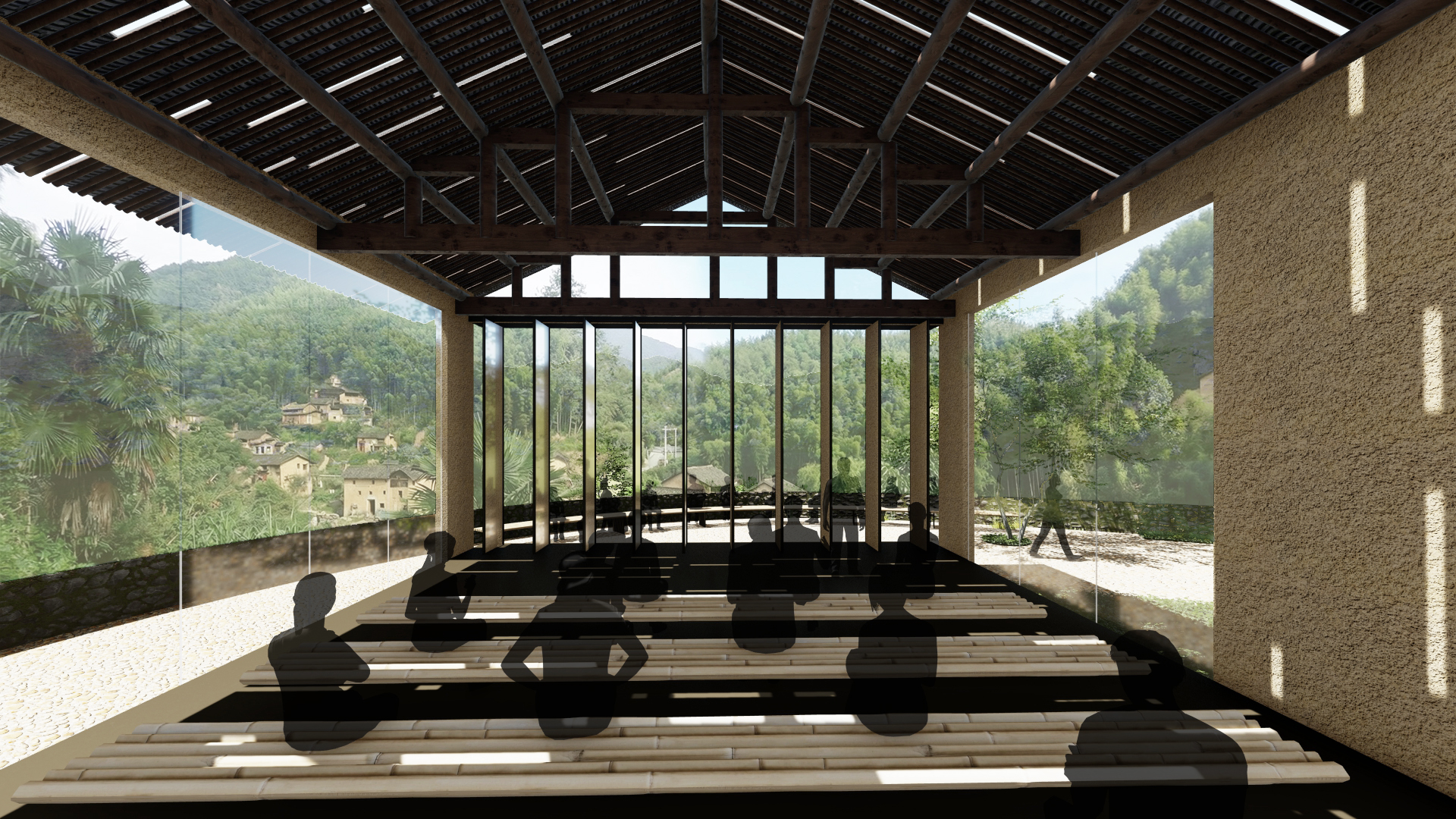
Following the changes in the height and orientation of the interior spaces, windows of varying sizes have been designed, framing the external landscape like hanging scroll paintings on the walls. As visitors pause at different locations, they can capture views that shift with the weather, ensuring that each visit presents a unique scene.
04 Connecting Interfaces
The building’s interfaces serve as a medium for dialogue with nature and the village. Areas near the windows are furnished with a variety of seating arrangements, not only to provide vantage points for viewing the landscape but also to create an immersive spatial experience that allows people to deeply perceive and engage with their surroundings. Additionally, the design extracts and revitalizes the inherent spatial essence of the old houses, transforming their small spaces into intimate, tranquil corners. This spatial typology is further extended outdoors, offering visitors a distinctly different kind of place-based experience.